AM australiamotorhomes.com Check availability
RED DUST TIMING

The best time to visit Outback Australia in a campervan

Red dust on the bonnet, a road train shimmering in the mirror, and 278 km to the next servo: the Outback rewards good timing and punishes wishful thinking. The best time to visit Outback Australia is not just about pleasant weather; it is about what roads are open, whether camps have shade, and whether your van’s fridge can keep up.

This guide is for self-drivers hiring a campervan or motorhome and sleeping in it, not doing a coach lap with someone else holding the keys. You will get the practical version: outback weather by month, wet versus dry season, camping rules, fuel gaps, sealed-road-friendly routes, and when to check availability online before the grey nomads take the good powered sites.
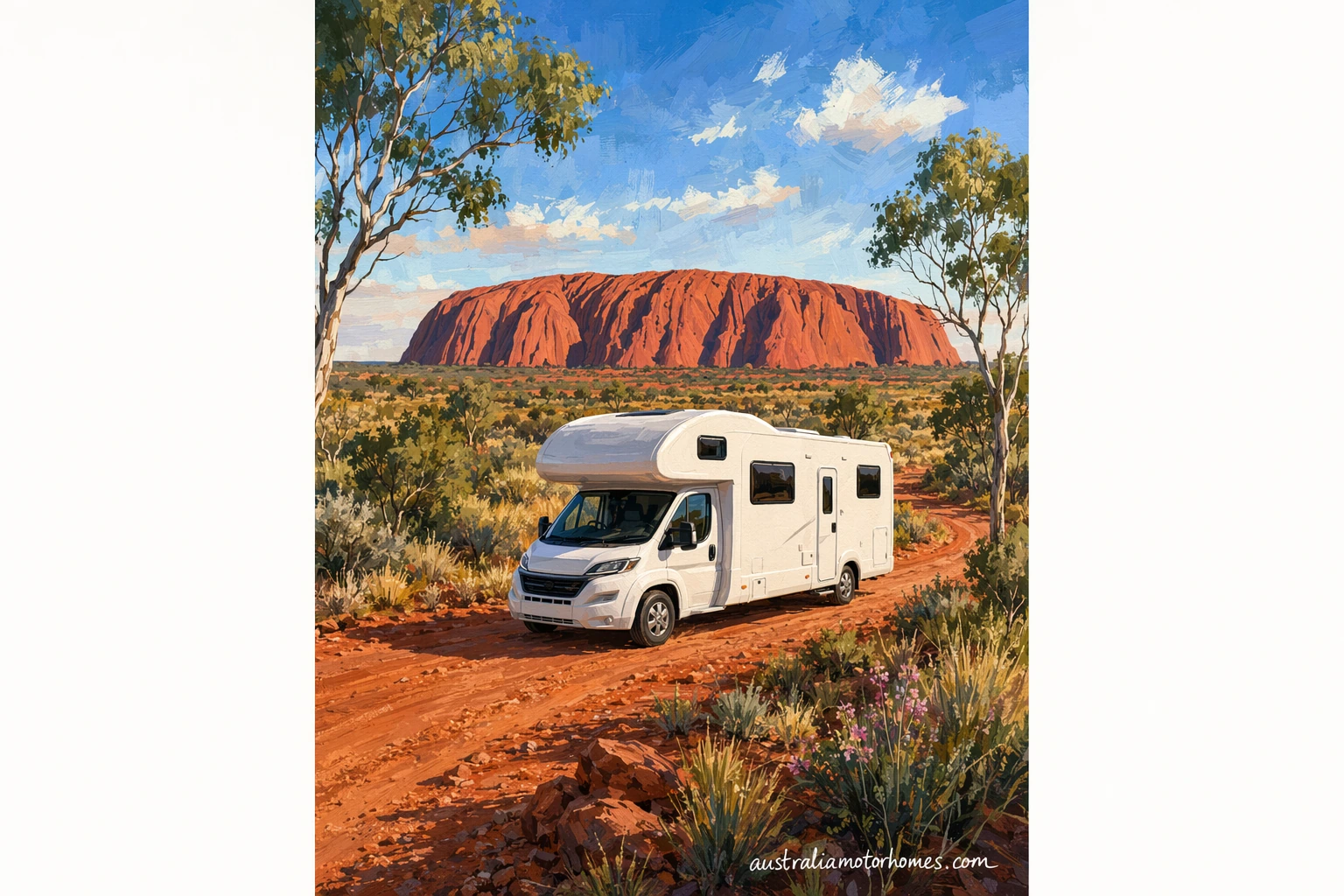
Illustration of a Maui-shape campervan with no branding parked beside a red-dirt Outback road at golden hour, a long road train in the distance, spinifex and low ranges under a huge blue sky, semi-realistic painterly style. australiamotorhomes.com
BEST MONTHSMay-Sep · driest touring
APR-MAY18-30°C · low rain
JUN-AUG20-26°C days · 0-8°C nights
SEP-OCT25-35°C · flies return
NOV-MAR35-45°C inland · storm risk
TOP END DRYMay-Oct · roads best
01

Short answer: April to October is the sweet spot

For most first-time campervan travellers, April to October is the most sensible window for the Red Centre, South Australian Outback, western Queensland, the Pilbara and much of the sealed Stuart Highway. Days are usually warm rather than furnace-grade, nights are sleepable, and you are less likely to meet a flooded causeway with a smug grin.

June to August is peak grey-nomad season. That means more vans in roadhouse queues, more booked-out powered sites around Alice Springs and Yulara, and more campfire chat about tyre pressures than any human strictly needs. It also means glorious walking weather: often 18-26°C by day in the Red Centre, with nights that can drop close to 0°C.

  • Best all-round months: May, June, July, August and September.
  • Best shoulder months: April and October, especially if you like fewer neighbours.
  • Hardest months: December to February inland, when 40-45°C days are not dramatic; they are Tuesday.
  • Do: book popular holiday parks and national park campgrounds early for June-August.
  • Don’t: assume “Outback” means dry everywhere; the northern Outback has a real Wet.
Short answer: April to October is the sweet spot
02

Outback weather by month, in campervan terms

When people ask when to visit Outback regions, they often look at daytime temperatures and forget the van-life bits: sleeping temperature, fridge strain, dust, flies, wind, and whether you can stand outside long enough to cook sausages without reconsidering your life choices.

In the Red Centre, summer days commonly sit around 35-40°C, while winter nights can fall to 0-5°C. Around Coober Pedy and the South Australian Outback, winter is cool and dry, but summer heat can be fierce. In the Top End, Kimberley and Gulf country, November to April brings humidity, storms and road closures; May to October is the reliable touring season.

  • January-March: very hot inland; northern storms and closures likely.
  • April: heat eases, flies hang around, many travellers start moving.
  • May-June: excellent for walking, camping and long sealed-road drives.
  • July-August: peak season; cold nights, clear skies, busy camps.
  • September-October: warmer days, fewer crowds, increasing fly activity.
  • November-December: heat builds fast; avoid ambitious remote plans in a standard hire van.
03

The Wet changes the map, not just the mood

The northern Outback runs to a different calendar. In places like the Kimberley, Katherine region, the Barkly, Gulf country and Cape-adjacent routes, the Wet can close roads for days or months. A sealed highway may reopen quickly; a dirt access road to a gorge, campground or lookout may not. Hire campervans are usually restricted from unsealed roads unless your agreement specifically allows it, and “just a few kilometres of dirt” is still dirt.

May to October is the normal dry-season touring window for the north. Waterfalls may be spectacular early in the Dry, but some tracks, boat ramps and campgrounds can open later after inspections. By September, it is hotter and dustier, but most key routes are usually running.

  • Check before driving: NT Road Report, WA road closures, QLD traffic and park alerts.
  • Fuel rule: refill when you can, not when the needle gets theatrical.
  • Road trains: expect combinations up to 53.5 m; give them room and do not duck back in early.
  • Do: carry at least 10-20 L of drinking water beyond your tank supply.
  • Don’t: drive through floodwater; depth markers are not invitations.
The Wet changes the map, not just the mood
04

Camping availability: winter comfort costs planning

Peak season in the Outback is not crowded like Bondi on Boxing Day, but it does concentrate everyone into the same useful places: powered sites near dump points, roadhouse camps with fuel, and national park campgrounds close to sunrise walks. Around Uluru, Kings Canyon, Alice Springs, Karijini and Katherine, book ahead in June-August if you want a powered site.

Free camping is part of the Big Lap rhythm, but it is not a free-for-all. Use signed rest areas, council-approved RV stops and legal roadside camps. Many have 24 or 48-hour limits. National parks generally require online bookings, and camping outside marked areas can earn you a very unromantic fine.

  • Powered sites: useful in hot months for air-con and fridge recovery.
  • Unpowered sites: fine in winter if your battery, solar and water use are realistic.
  • Dump points: plan them every 2-3 days if using an onboard toilet.
  • LPG swaps: easiest in larger towns and roadhouse stops, not at every dusty dot on the map.
  • Don’t: empty grey water near creeks, bores or sacred sites; leave the place cleaner than you found it.
05

Driving conditions: sealed roads are enough for a proper Outback trip

You do not need a 4WD to feel the scale of Outback Australia. A sealed-road campervan route can take you from Adelaide to Coober Pedy and Uluru, across to Alice Springs and Tennant Creek, or from Darwin down to Katherine and Mataranka in the Dry. The trick is respecting distance: Port Augusta to Coober Pedy is about 540 km, Alice Springs to Uluru about 450 km, and Mount Isa to Tennant Creek roughly 660 km.

Dawn and dusk are beautiful and stupid for driving because kangaroos, cattle and camels are most active then. Plan to be parked by late afternoon, with dinner sorted before the flies clock off and the mosquitoes clock on. If a road train is overtaking, ease off slightly, hold your line and let the big rig get on with its day.

  • Fuel range: know your van’s tank size and plan legs with a 100 km buffer where possible.
  • Speed: NT open-road limits can be 130 km/h, but a tall campervan is happier driven conservatively.
  • Tyres: check pressures cold and inspect for stone damage at fuel stops.
  • Heat: never leave people, pets or fresh groceries in a parked van without ventilation.
  • Do: download offline maps; mobile coverage disappears between towns.
06

Where to point the bonnet by season

If your dates are fixed, choose the region to match them rather than forcing a grand Outback dream into the wrong month. April and May are excellent for the South Australian Outback and Red Centre. June to August suits the classic Stuart Highway run and northern Dry season. September and October are good for fewer crowds, but start early and respect the heat.

Summer is not impossible, but it is a specialist choice. Stick closer to serviced towns, keep drives short, choose powered sites, and avoid remote dirt-road adventures. A breakdown in 44°C heat turns a yarn into a problem very quickly.

  • April-May: Coober Pedy, Flinders Ranges, Uluru, Alice Springs.
  • June-August: Red Centre, Top End, Kimberley edges, Karijini.
  • September-October: Red Centre early starts, western Queensland, Pilbara coast.
  • November-March: only if you plan around heat, storms and shorter drives.
  • Best move: check campervan availability online once you know the season, then build the camps around the vehicle.
THE LAY OF THE LAND

Easy loops out of here

Illustrated travel map — The best time to visit Outback Australia in a campervan
australiamotorhomes.com · ATLAS
SHORTLIST

Sort your first night

Alice Springs powered base
powered holiday park

Alice Springs powered base

Good first-night reset with fuel, groceries, dump points and Red Centre day-trip options nearby.

Yulara campground
powered/unpowered campground

Yulara campground

The practical base for Uluru and Kata Tjuta; book early in winter and do not camp inside the national park.

Karlu Karlu / Devils Marbles
NP campground

Karlu Karlu / Devils Marbles

Simple bush camping off the Stuart Highway; arrive with water and a valid park booking.

STRAIGHT ANSWERS

Questions self-drivers actually ask

What is the best time to visit Outback Australia in a campervan?
For most self-drivers, May to September is the best mix of mild days, cold but manageable nights, open roads and active campgrounds. April and October can be excellent shoulder months if you want fewer people and can handle warmer afternoons.
Can I visit the Outback in summer with a hire campervan?
Yes, but it is not the easy version. Expect 35-45°C inland, shorter safe driving windows, heavy fridge and battery use, and greater consequences if something goes wrong. Choose powered sites, keep drives short and avoid remote unsealed routes.
Do I need a 4WD camper to see the Outback?
No. A standard campervan or motorhome can cover major sealed routes such as Adelaide-Coober Pedy-Uluru-Alice Springs and Darwin-Katherine in the right season. Do not take a 2WD hire vehicle on unsealed roads unless your rental conditions specifically allow it.
When is the Wet season in Outback Australia?
Across the northern Outback, the Wet usually runs from November to April. It brings heat, humidity, storms, flooded crossings and seasonal closures. The Dry, roughly May to October, is the safer and more predictable campervan window.
Is free camping allowed in the Outback?
Often, but only where it is permitted. Use signed rest areas, council RV stops and legal roadside camps, and obey 24 or 48-hour limits. National parks usually require booked campgrounds, and dumping toilet waste or grey water in the bush is a fast way to become unpopular.
How far apart are fuel stops in the Outback?
On major highways, fuel stops are commonly 150-300 km apart, but some legs are longer; Mount Isa to Tennant Creek is about 660 km. Top up whenever you can, check opening hours, and keep a buffer rather than arriving on fumes like a budget action movie.
BOOK ONLINE · 180+ COUNTRIES

Lock in your dates and get rolling

Check the camper, the dates and the price online, then book it — no quotes, no waiting around.

Check availability & book