
Selected Sundays
Todd Mall Markets, Alice Springs
Usually 9 am–1 pm in the cooler market season; park a block or two out and restock before heading to a caravan park or signed camp.
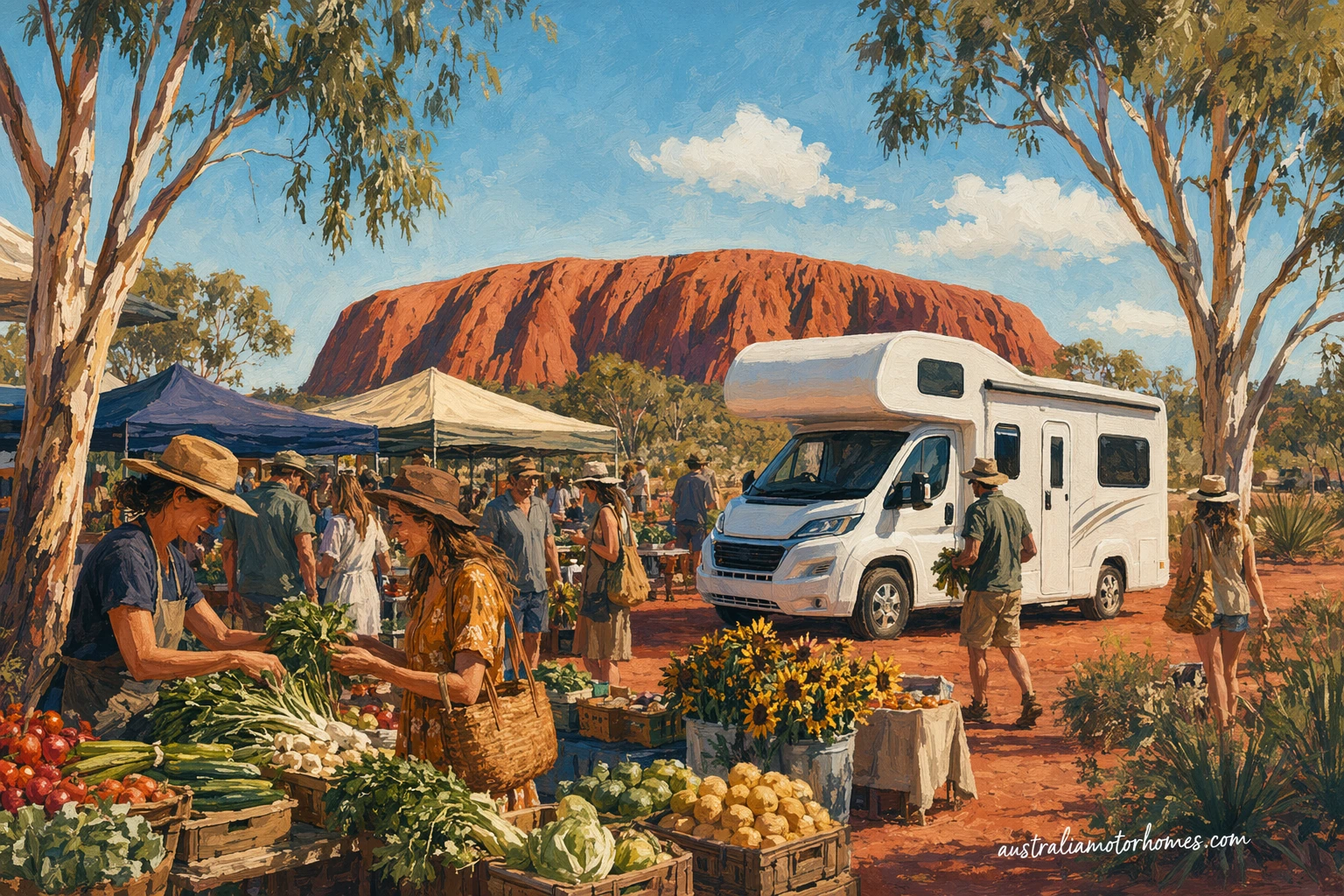
The best bakery scroll in an outback town is usually sold before 9 am, from a folding table, beside a ute with red dust on the mudflaps. That is the local secret: outback markets are not just craft stalls and cucumber relish. They are where self-drivers find eggs, tomatoes, mangoes, bush honey, proper coffee and the bloke who knows whether the next free camp has water or just a tap-shaped disappointment.
 AM
AM 

Usually 9 am–1 pm in the cooler market season; park a block or two out and restock before heading to a caravan park or signed camp.

Morning market with tropical produce in season; useful before a Katherine Gorge or Mataranka run, but check wet-season dates.
A practical town-centre stop for baked goods, preserves and local produce; long vehicles are better off parking on wider side streets.
Outback food runs can be oddly theatrical. One minute you are passing a road train throwing heat shimmer across the bitumen; two hours later you are choosing passionfruit, sourdough and a jar of quandong jam from someone who grew, baked or bartered it within shouting distance of town.
The practical reason is simple: supermarkets in small towns may have limited fresh stock after a big weekend, a flood, or a truck delay. Weekend markets outback can fill the gap, especially in cooler months when growers, station cooks and community groups come out early.
Check the town council or visitor centre listing the day before. Outback calendars move for heat, footy finals, show week, floods and the occasional collective shrug.

A 6 m campervan is usually fine around town markets; a 7.5 m motorhome towing a little car is where things get spicy. Main-street markets often close off kerbside parking, so treat the first lap as reconnaissance, not a personal challenge.
In places like Alice Springs, Broken Hill and Kalgoorlie-Boulder, the sensible move is to park one or two blocks out, nose out if possible, and walk in with a collapsible crate. Height is rarely the issue in open outback streets, but shade trees, awnings and low-slung pub verandahs are excellent at finding roof vents.
If the market is beside a park, do not set up chairs and breakfast like it is your campsite. Grab supplies, enjoy the morning, then move to a legal camp or holiday park before the ranger develops an interest in your number plate.
Fresh produce outback is more seasonal than coastal travellers expect. In the Red Centre, you might score citrus, herbs, eggs, dates, baked goods and preserves. Up around Katherine in the dry season, the tables can swing tropical: mangoes, melons, Asian greens, bananas, chilli sauces and proper iced coffee that tastes like survival.
Further south and west, food markets outback campervan travellers love tend to be community-driven: station beef sausages, honey, olives, bread, cakes, seedlings, jams and the sort of relish that makes a servo pie feel less like a life decision.
One big trap: quarantine zones. Before crossing into South Australia, Western Australia or fruit-fly exclusion areas, check current rules and use the amnesty bins. Losing $40 of peaches is annoying; spreading fruit fly is how travellers become unpopular in agricultural towns.
The tidy outback rhythm is market in the morning, servo fuel top-up, water fill, dump point if needed, then camp before dusk. Night driving sounds romantic until a roo appears at 95 km/h and your dinner ingredients become airborne.
Most market towns have at least one powered holiday park, and many have showgrounds or council camps that suit self-contained vans. Free camps can be brilliant, but they are not a loophole for camping wherever you can fit. Council fines can exceed $300, and day-use car parks are often patrolled after dark.
A good camp after a market is not always the prettiest one. Sometimes it is the place with a dump point, potable water, a level bay and a bottle-o within walking distance. Romance has its limits.
Outback markets look close on a map until the scale bar starts laughing. Alice Springs to Tennant Creek is 508 km. Tennant Creek to Mount Isa is about 661 km across the Barkly. Mount Isa to Longreach is roughly 647 km. These are not duck-out-for-milk distances.
Plan fuel before you plan coffee. On sealed highways, a hired campervan is generally happy, but fuel gaps of 250–350 km are common once you leave the bigger towns. Fill at half a tank if you are unsure, especially on weekends when smaller servos can have shorter hours.
If you want the comfort of a fridge, bed and bug screens without gambling on unsuitable tracks, choose a sealed-road outback loop and book the right campervan online before peak grey-nomad season fills the good vehicles.

Check the camper, the dates and the price online, then book it — no quotes, no waiting around.
Check availability & book ›