
powered holiday park
Yulara Campground
Closest legal campervan base for Uluru, with powered and unpowered sites in the resort precinct.
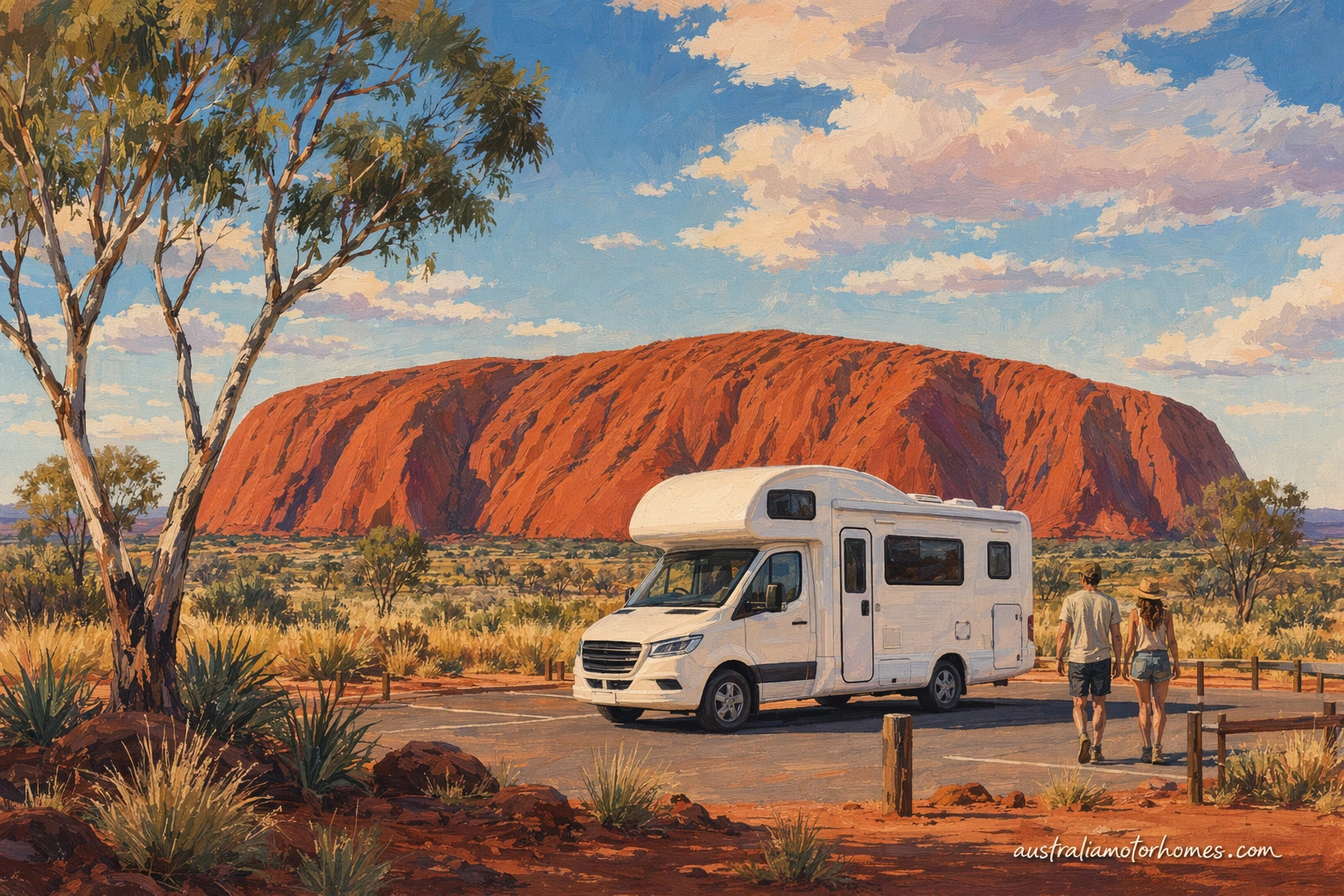 australiamotorhomes.com
 You do not need a 4WD to see Uluru. The main roads in are sealed, the car parks take campervans, and the nearest legal campground is close enough that you can still make sunrise without becoming a dawn-deranged galah.
This guide is for self-drivers sleeping in the van: where to park, where to camp, how to get to Uluru, what the park pass covers, and the practical bits that matter when your fridge, bed and bathroom are all part of the same rolling box.
The classic run is from Alice Springs to Yulara, about 465 km depending on where you start in town. It is sealed all the way via the Stuart and Lasseter highways, but it is still proper outback driving: long straights, heat shimmer, wedge-tailed eagles on roadkill, and the occasional road train that makes your hired motorhome feel like a lunchbox.
If you are wondering how to get to Uluru in a standard campervan, the answer is simple: use the sealed highways, top up fuel when you can, and do not turn the van onto random dirt tracks because a map app got creative after lunch.
Do: leave early and arrive with daylight. Do not: drive at night unless you enjoy meeting kangaroos, camels and cattle at bonnet height.

Uluru campervan parking is refreshingly straightforward if you treat the place like a national park, not a shopping-centre car park. The main visitor areas have sealed access roads and marked parking, with room for typical 2-berth to 6-berth hired campervans and motorhomes. Large rigs should park carefully and avoid taking up bus bays unless signs or staff direct you there.
The useful spots are the Cultural Centre, Mala car park, Kuniya car park near Mutitjulu Waterhole, the sunrise viewing area at Talinguru Nyakunytjaku, and the car sunset viewing area. There are no practical height dramas for normal rental motorhomes, but shade structures, kerbs and tight turning loops are where people come unstuck.
Do not sleep in any Uluru car park. No sneaky overnighters, no cooking dinner with the slide door open, no pretending the ranger cannot see a white motorhome against red dirt.
Uluru-Kata Tjuta National Park requires a park pass, currently about $38 per adult for a 3-day pass, with children under 18 generally free. Prices and conditions can change, so check the current pass details before you book and again before you roll through the gate.
Park opening times shift through the year, roughly from early morning to evening, with seasonal changes so visitors can catch sunrise and sunset safely. Gates close at night, and you need to be out before closing unless you fancy explaining yourself to Parks staff in your camp thongs.
Do: start at the Cultural Centre before walking around the rock. Do not: treat Uluru as just a backdrop for van-life posing; Anangu law and culture are not scenery.

The closest legal place to sleep in your campervan is the campground at Yulara, in the resort precinct about 20 km from Uluru. This is the practical base: powered and unpowered sites, toilets, showers, laundry-style facilities, fuel nearby, basic groceries, and the sort of dusty campground camaraderie that starts with tyre-pressure chat and ends with someone lending you a peg.
Campsites near Uluru are limited because the national park itself does not allow camping. In busy months, especially June to September and school holidays, book your site early. The alternative is staying farther out at Curtin Springs, Erldunda, Kings Canyon or Alice Springs, which can work well on a loop but adds driving.
Do: arrive with water tanks topped up and toilet cassette managed. Do not: assume every roadside pull-off is a free camp; check signs, apps and local rules.
One night is technically possible and emotionally stingy. Two nights is the sweet minimum for most self-drivers: arrive, set up, see sunset, do an early walk, visit the Cultural Centre, then head to Kata Tjuta or take a slower second evening without driving like a caffeinated dingo.
Three nights is better if you want to include Kata Tjuta properly, have a rest from the highway, or avoid walking in dangerous heat. The Uluru base walk is about 10.6 km and usually takes 3-4 hours, but summer temperatures can push past 40°C, and some walks may close after 11 am on days forecast to reach 36°C or more.
Do: carry at least 3-4 litres of water per person for longer walks. Do not: start the base walk at noon because the sky looks pretty and your hat has a wide brim.
Yulara has fuel and supplies, but this is remote Australia, not a suburban servo strip. Prices can be higher, opening hours matter, and the next useful stop may be hundreds of kilometres away. Keep a sensible fuel buffer, especially if your motorhome is working hard into a headwind or carrying full water tanks.
Road trains use the Lasseter and Stuart highways. When overtaking, give yourself a long clear view and do not sit in the spray of stones behind them. If one comes the other way, hold your line, ease off slightly and let the big fella have the road it has clearly already paid rent on.
Do: check availability online for a campervan with enough range, storage and sleeping comfort for remote sealed-road touring. Do not: book the smallest van on earth then pack it like you are crossing Antarctica.
Closest legal campervan base for Uluru, with powered and unpowered sites in the resort precinct.

About 85 km east of Yulara, useful if you want a softer arrival or departure day.

Good Stuart Highway staging point about 245 km from Yulara, especially after a long run from Alice or Coober Pedy.
Check the camper, the dates and the price online, then book it — no quotes, no waiting around.
Check availability & book ›